

“The kind of spaces that we create are defined by the mindset of society – and vice versa: space can influence how society behaves” interview with Sebestyén Pfisztner
Milestone Blog
Sebestyén Pfisztner – Interview
2025. 07. 30.
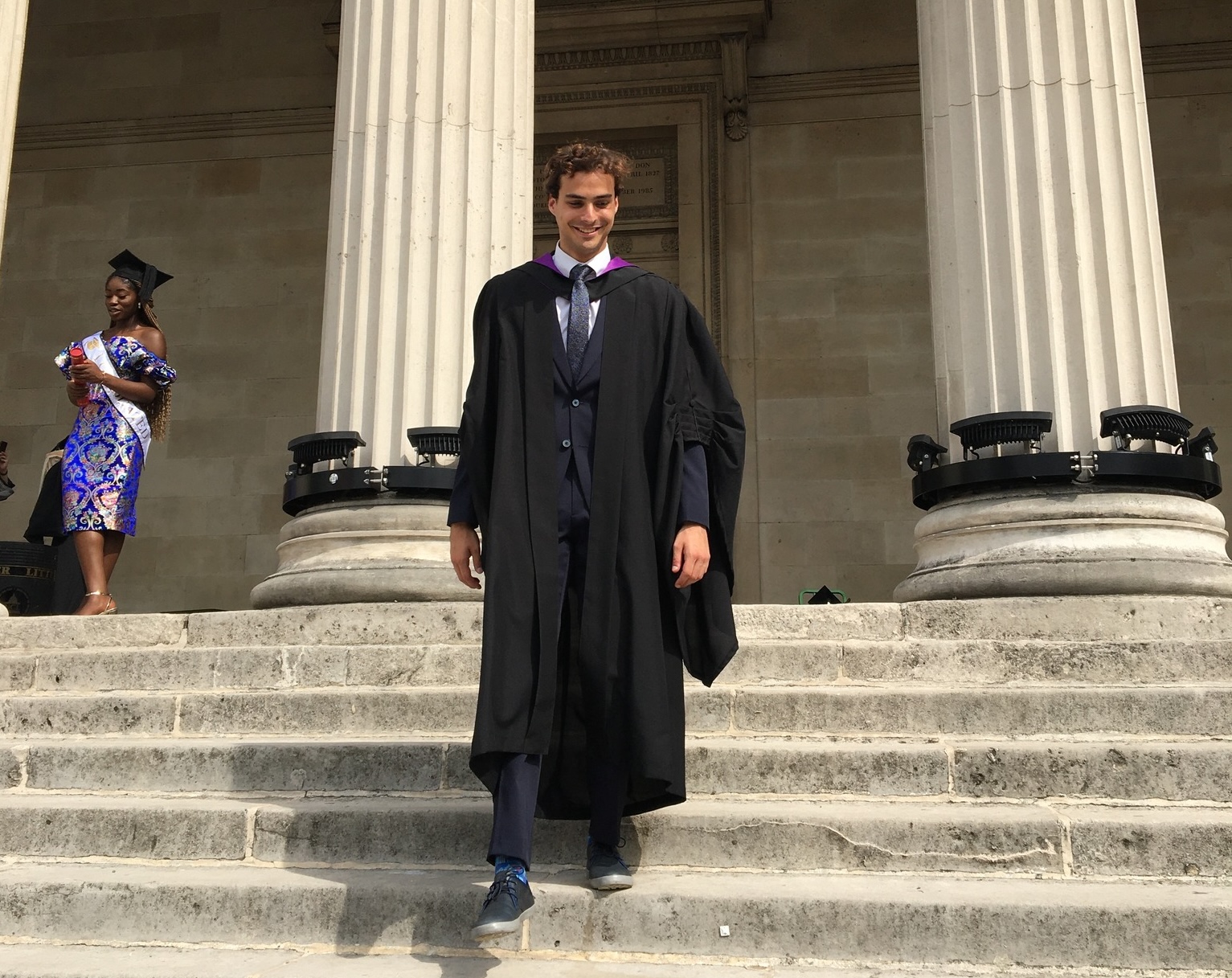
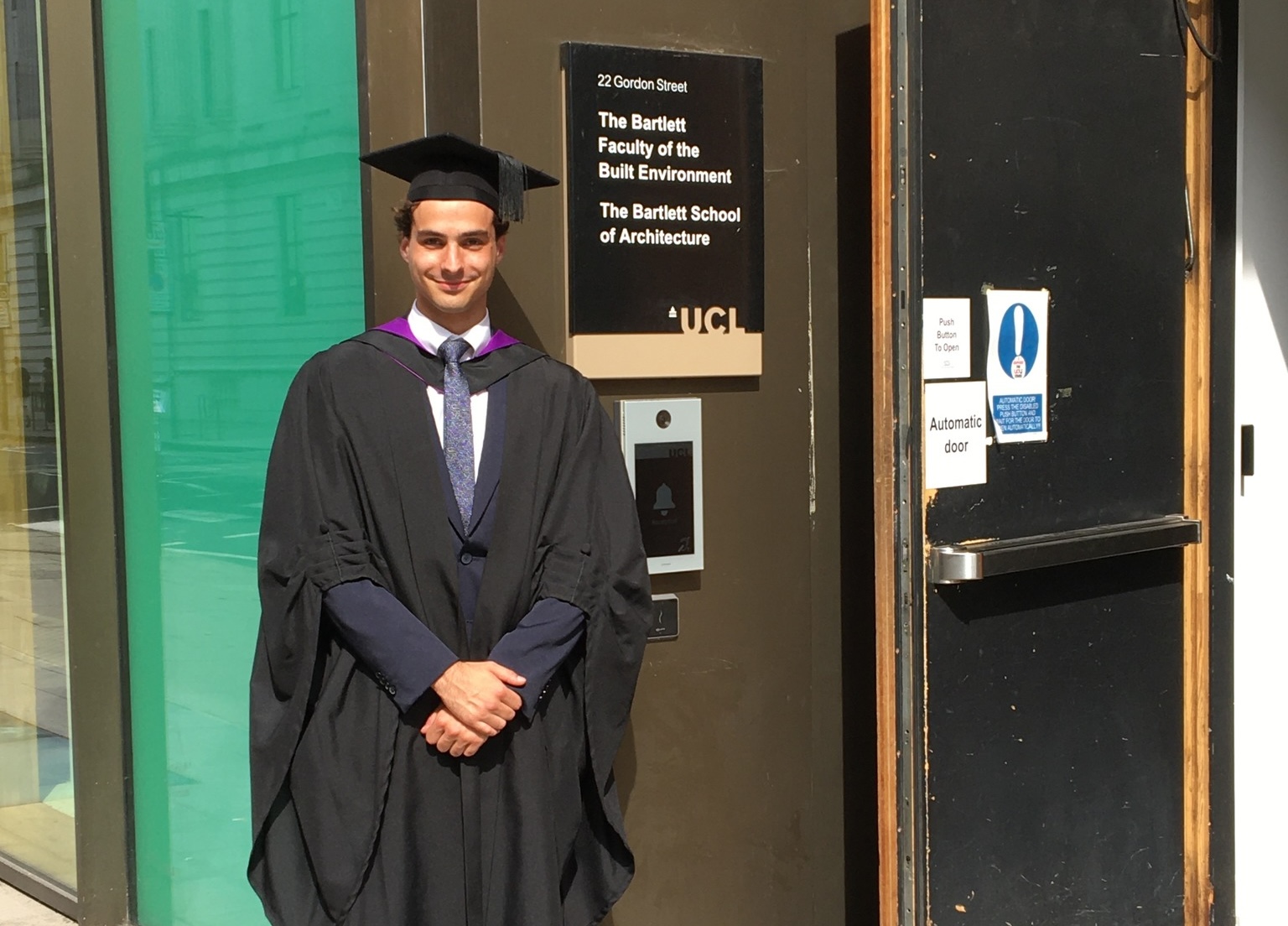
Sebu, a former student of ours, completed his undergraduate degree in Urban Planning, Design, and Management at UCL Bartlett and is now continuing his studies in Urban Design at Delft University of Technology. He speaks passionately about what drew him into urbanism, what his professional convictions are, and why he considers socially responsible urban development one of the most crucial issues today.
How did you first hear about Milestone?
Through my sister, who applied back in 2014. I was attending a six-year secondary school, and from early on I had a feeling I wanted to go to university abroad. My parents suggested I apply to Milestone. We put together my application, and everything happened pretty quickly. At the time, I didn’t even speak English particularly well, so I was quite nervous. Eventually, I was invited for an interview – the conversation with Ádám Havas and Jani Hódsági had a really good atmosphere, and after that I wasn’t too surprised to be accepted.
My issue at the time wasn’t so much with the Hungarian education system – I actually enjoyed attending high school – but rather that the kind of programme I wanted to study simply didn’t exist in Hungary then (and still doesn’t).
Initially, I was interested in physics-related and engineering courses because I was good at physics and enjoyed working with it, but the maths component required a much higher level of knowledge than I had. After my first year at Milestone, I started looking for courses that better suited my abilities and were related to the built environment. That’s how I discovered urban studies, and suddenly everything clicked. I immediately let go of the engineering path and focused solely on urban design. That’s also when my very productive collaboration began with my mentor, Zsolt Novák – he could sense that I’d found the right direction, that I was motivated and ambitious in this field.
Which countries and universities did you target?
Apart from the UK, I only applied to the architecture faculty at BME (Budapest University of Technology and Economics), but my main goal was always the UK, specifically UCL’s Bartlett and the University of Bath. Bartlett is the world’s leading faculty for the built environment, and I applied for both architecture and urban studies. Architecture had been a passion of mine since childhood, but I never really had a natural talent for it, so I figured I would only do architecture if I got accepted there. In the end, I was accepted for urban studies at Bartlett, and even from the beginning I felt it suited me better and was more interesting than architecture.
During my final year of school, I had internships in several places, and I often heard comments like, “a real architect is someone who designs; urban planners are just ‘fake’ architects.” That stuck with me and was partly why I applied to both courses. Now I know that this kind of thinking is typical only in Hungary – in the UK and the Netherlands, the two professions are treated entirely independently. In Hungary, urbanism as an independent field basically doesn’t exist – spatial planning is done by landscape architects, and chief architect roles are mostly administrative.
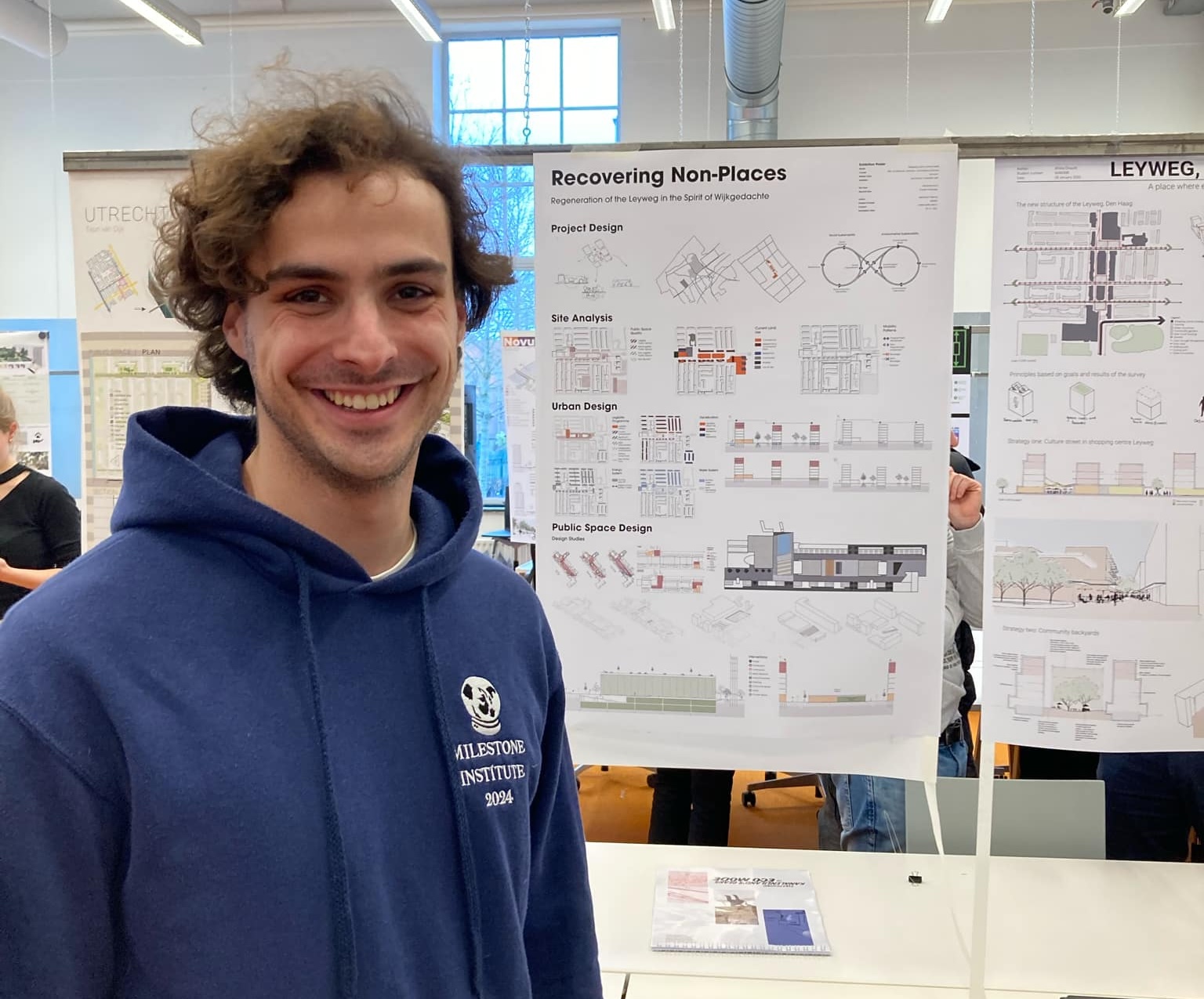
What is your fundamental experience or relationship with cities? What do you find most interesting about them?
Even as a child, I was fascinated by urban environments and the systems that make cities function. Later I realised I naturally think in systems – I find it easy to understand complex structures. I became intrigued by how a city works, how it changes, evolves, takes shape, and affects its residents.
I loved living in Budapest and observing the city and its people – noticing when urban systems work and when they don’t.
During high school, I interned at two places: the Contemporary Architecture Centre (KÉK) and at one of Hello Wood’s camps. In the latter, we built a pedestrian bridge in Olaszliszka, and that’s where I first encountered the professional scepticism around urbanism – some people considered it pseudoscience. I’ll admit, that sometimes made me doubt myself. But in the UK, it’s almost the opposite: architectural education is increasingly criticised for lacking practical training, while urban planners are in high demand because of their complex skill set. Their methods and mindset are highly applicable across various fields.
Was gaining internship experience always a priority for you alongside your studies?
Yes, that was a conscious goal from the beginning. I decided early in my undergraduate studies that I wanted to do an internship, but I only managed to start after my second year. The first year was intense – adapting to a new system, plus the impact of Covid – it just wasn’t realistic at the time.
After second year, though, I had enough knowledge and experience to contribute meaningfully. I started as an urban planning intern at BDP. I was thrilled when they accepted me – it’s one of the largest and most respected architectural firms in the UK. They were also the first globally to use a method where professionals from various spatial disciplines collaborate integratively on projects. That kind of interdisciplinary approach really resonated with me, so working there was a very positive experience.
I wanted to return after third year in a more urban design-focused role, but unfortunately, due to the economic climate, that wasn’t possible. I’ve kept in touch with the team there, and I’ll try to return after completing my master’s, though the situation remains difficult.
I especially admire the firm for its values – they’re not just technically strong, but morally consistent as well. They’ve turned down commissions for ethical reasons and publicly distanced themselves from projects they didn’t agree with – that’s rare in the profession. It’s important to me to work somewhere that delivers not only impressive but also responsible projects – where professional knowledge and ethical values align.
How is the Dutch approach to education and housing different?
There are major differences, not just in education but also in how planning is approached. In the Netherlands, the process and outcomes of urban planning are much more deeply embedded in how society functions. For instance, social housing isn’t just an empty promise – it’s part of everyday practice. By law, 30% of homes in a residential development must be socially accessible. It’s standard.
In contrast, in the UK – especially London – affordable housing has practically disappeared. I experienced this personally as a student; housing was by far my biggest expense. It was slightly cheaper during the Covid period, but still wildly unaffordable. This personally affected me, and at the same time I started researching the history of the UK housing system. I was shocked to discover it used to be a global role model. Up to the 1970s, they built almost 15 million high-quality social housing units, which were valued as a public good. Then, during the Thatcher era, the system was almost entirely dismantled.
This contrast is what got me interested in the links between housing and wider social and economic issues – which became the foundation of my thesis. My core argument is that spatial design is always ideological. The kinds of spaces created are shaped by a society’s ideology – and in turn, space can influence how that society behaves.
That’s why I believe urban development should be driven not by market logic but by social concerns. Housing is one of the fundamental pillars of society, which means it’s in everyone’s interest – and responsibility – to ensure we have a functional housing system. But that requires commitment from both the state and local governments. If we want real change, working in the private sector alone won’t be enough – we also need value-driven, institutional-level planning.
Are you more motivated by professional commitment or by the desire to be part of societal change?
Primarily by the desire for societal change – but my respect and dedication to the profession stem from that. I didn’t choose this path just because of the work itself, but because I’m deeply disturbed and angered by the injustice caused by social inequality.
When I see people amassing unimaginable wealth while others sleep in cardboard boxes in minus ten degrees, it causes such cognitive dissonance in me that I can’t ignore it. That’s what set me on this path – I can only be at peace with myself if I work toward a world I’d also want to live in.
Humans are fundamentally social beings, and I believe we’re capable of so much more when we nurture this sense of community. But in today’s society, success is tied exclusively to individual achievement, and failure is seen as a personal fault – which deeply poisons social coexistence and cooperation.
That’s why I think it’s crucial to create spaces and programmes that promote solidarity, communal responsibility, and social justice. That’s also why I’m working on a thesis that explores the issue of social housing. My main argument is that we can find effective contemporary solutions by drawing on lessons from the past – and adapting them to the current context.
I believe the most important takeaway is that we don’t need to reinvent the wheel every time we want to move something forward. If we know something works, we should use it – and welfare states with social housing systems are the best examples of this.
What are your medium- and long-term professional plans? Is Budapest your final goal?
In the medium term, I plan to continue my career in London, as I believe that’s where I can learn and grow the most right now. But in the long term, I definitely see my future in Budapest. My connection to the city is both personal and professional.
Budapest has exceptional potential: a great urban fabric, efficient public transport, green areas, and brownfield sites ready for development – all elements with enormous opportunities. There’s space, structure, and character. River, island, flat and hilly terrain – together, these make the city unique. From a geographical and infrastructural standpoint, the city is ready to become one of the most liveable in the world. What’s missing are three things: adequate funding, political will, and the professional humility of decision-makers. Sadly, over the past few decades, we’ve often seen political leadership make arbitrary decisions, disregarding expert opinions. But if professionals were allowed to work within their expertise and decisions were based on solid knowledge, Budapest could fully realise its incredible potential.
Milestone Blog
További történetek, gondolatok és nézőpontok.